


How to Inspect Your Trailer Before a Long Trip

How to Inspect Your Trailer Before a Long Trip
A long road trip with your trailer should mean adventure and freedom — not breakdowns and stress. Whether you’re hauling gear for a weekend getaway or running a business that depends on reliable equipment, the last thing you want is to end up stranded far from home with a failed component.
A thorough pre-trip inspection is often the difference between a smooth journey and a roadside disaster. Defective brakes and tires are the top two vehicle-related violations affecting commercial motor vehicles. A careful inspection before you leave helps you catch potentially dangerous issues early, prevent breakdowns and avoid costly emergency repairs. You should also research where to get quality replacement parts along your route.
The Essential Pre-Trip Trailer Inspection Checklist
Knowing what to check on a trailer before towing makes all the difference. Having a maintenance checklist makes it easier to inspect the trailer parts before you travel.
1. Tires and Wheels
Tires fail more often than any other trailer component. They carry heavy loads and often receive extended sun exposure. Damaged tires affect other trailer parts, such as the wiring, frame and fender wells. Make sure you check every tire, including the spare.
Start by checking your tire pressure — only measure when tires are cold. Underinflated tires generate excessive heat that can lead to blowouts, while overinflated tires reduce the contact patch and make handling unpredictable. You should also verify that tread depth meets the legal minimum of 2/32 of an inch. Look for uneven wear, as it often signals overloading or wheel alignment problems.
2. Brakes and Breakaway System
Defective brakes are the leading cause of out-of-service violations in commercial vehicle inspections. Before your trip, do a low-speed test to verify that the brakes engage properly. A breakaway switch automatically engages a trailer’s brakes if the trailer accidentally disconnects from your tow vehicle. Check the breakaway switch by pulling the pin and confirming the brakes lock up.
3. Suspension and Axles
A trailer’s suspension system supports the trailer’s weight, absorbs road shock and keeps the axles and tires on the road. The suspension connects the axles to the frame, distributing the weight evenly. The axle system carries the load. When inspecting both systems, ensure your trailer is on a solid, level surface.
When inspecting the suspension components, check each:
- Frame hanger for cracks, rust and bent components.
- Leaf spring for cracks and flattening.
- Spring shackle, hanger and bolt for wear and looseness.
- Shock absorber for dents and leaking fluid.
When inspecting the axle system, check for:
- Dents and scraped paint.
- Forward and rearward bends.
- Uneven distance between axles.
A trailer leaning on one side also signals misalignment.
4. Hubs and Bearings
The hub mounts directly to the axle and houses the wheel bearings. The wheel bearings are responsible for smooth wheel rotation and ensure a safe towing experience. Hub moisture can cause corrosion of the bearing assemblies. When inspecting the hubs and bearings, look for:
- Signs of wear and debris.
- Grease leaks within the wheel.
- Unusual noise or a rough, grinding feeling when spinning the tire.
- Vibrations and wobbling that compromise trailer stability.
- Excessive heat from the hub after a short drive.
5. Coupler, Hitch and Safety Chains
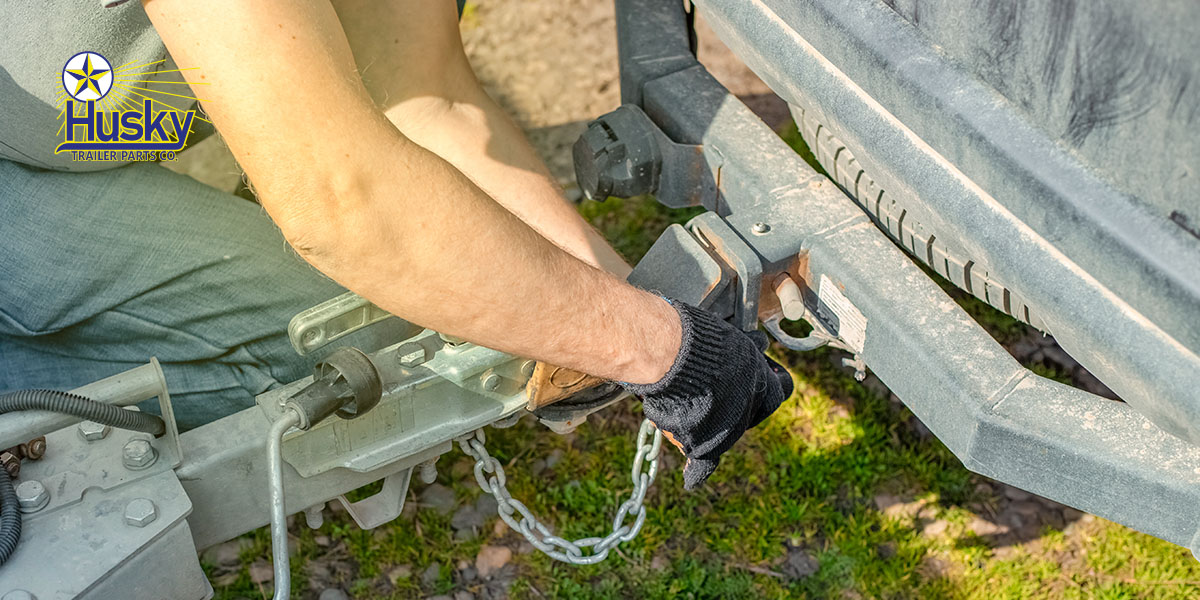
The coupler latches onto the hitch ball, connecting your trailer and vehicle. Safety chains ensure the trailer remains connected even if the primary hitch fails. Defective systems risk a detached trailer on a road or highway. During your pre-trip inspection, make sure your trailer complies with relevant regulations.

ederal regulations require safety chains for applicable commercial motor vehicles. State towing laws govern noncommercial haulers. For instance, Texas requires the safety chains to be robust enough to maintain the connection between your trailer and towing vehicle. Other signs to watch out for include:
- Cracks and damage on the coupler.
- Mismatched hitch ball and coupler sizes.
- Uncrossed safety chains under the coupler.
- Dragging, unsecured chains.
6. Lights and Wiring
Lights enable you to signal appropriately on the road, while effective wiring helps ensure peak trailer performance. When testing each trailer function, make sure another person checks the lights for you.
Confirm that the following lights are working:
- Turn signals
- Brake lights
- Running lights
- Reverse lights
- License plate light
Inspect the wiring harness for frayed, corroded and damaged wires.
7. Trailer Frame and Cargo
Your load type and how you distribute weight matter significantly. Improper weight distribution causes trailers to sway, while loose cargo shifts your center of gravity mid-turn. You need to secure all cargo with quality straps, placing heavy items low and centered. Make sure to securely fasten exterior cargo, such as roof racks and bike carriers. Inspect the trailer frame for cracks and damage.
Common Trailer Issues to Catch Before You Tow
Understanding how to inspect a trailer means knowing which failures pose the greatest risk. Your inspection checklist should help you catch these issues before they strand you.
Tire Blowouts
A tire blowout at highway speeds can cause you to lose control, potentially leading to rollovers and collisions. The sudden failure also sends debris flying.
Blowouts are often due to:
- Excessive weight that strains tires.
- Uneven tire tread from irregular rotation.
- Old and worn tires that lost their structural integrity.
- Damaged roads with potholes and nails.
- Underinflated tires that generate excessive internal heat.
Worn Wheel Bearings
When wheel bearings fail, the wheel can separate from the trailer while you’re traveling. This event creates a dangerous projectile and leaves you with a collapsed axle.
Bearing failure often results from:
- Faulty installation that doesn’t follow manufacturer guidelines.
- Overweight loads that exceed the trailer’s rated capacity.
- Unbalanced tires that create uneven forces.
- Poor road conditions, such as rough pavement and water intrusion.
Brake or Hub Failure
Without functioning brakes, you lose the ability to stop safely. This defect makes it impossible to avoid collisions.
Brake failures occur due to:
- Mechanical wear that reduces pad thickness and damages brake drums.
- Electrical failures that prevent the brake signal from reaching the brake magnets.
- Performance irregularities from damaged components.
- Controller malfunctions that send incorrect signals.
- Hydraulic system leaks that eliminate braking pressure.
Faulty Electrical Connections
When your trailer lights fail, other drivers can’t see your brake and turn signals, which increases the risk of rear-end collisions, especially in low-visibility conditions. Moisture, dirt and grime also interrupt the flow of electricity. Corrosion at connection points degrades electrical conductivity over time.
When Should You Replace Your Trailer Parts?
You typically need to replace your trailer parts when you experience repeated component failures or notice cracks and structural damage. These damages can compromise safety and compliance. Replacement is also a better investment if you need frequent, expensive repairs.
If you’re still skeptical about replacements, your components may benefit from repairs if you experience:
- Isolated component failures with no impact on system performance.
- Minor wear and tear of components with no structural damage.
Understanding when to replace trailer parts prevents unexpected breakdowns, reduces costly emergency repairs and improves road safety. Getting the correct parts quickly lets you spend less time in the shop and more time on the road.

Get Road-Ready With Husky Trailer Parts Co.
When your inspection reveals worn bearings, damaged brakes and aging tires, you need quality parts fast. Husky Trailer Parts Co. is your one-stop shop with everything in stock and ready to ship nationwide. We’re a family-run company with generations of trust since 1962, delivering the parts you need to get back on the road. We carry a huge selection from premium, recognized brands, so you’re sure to find what you need in stock.
Our knowledgeable sales team brings so much experience — they’re like walking catalogs, ready to help you find the best value for your needs. Whether you’re looking for wheels, brakes, couplers, taillights or hubs, we’ll match you with the right parts for peak performance. Shop now and experience the convenience of fast nationwide shipping.
